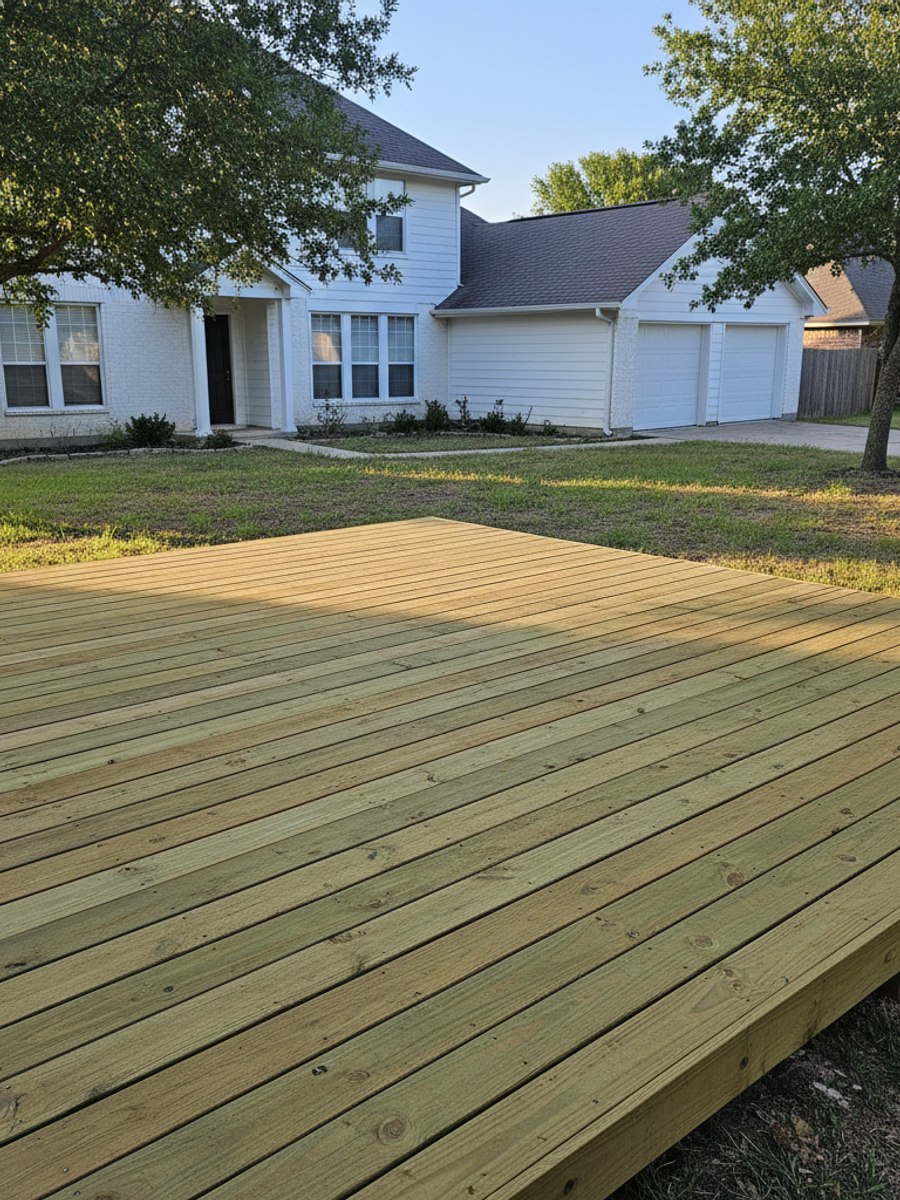
Most people shopping for a deck builder in El Paso end up comparing three quotes that look nothing alike. One guy wants $4,000, another wants $11,000, and you have no way to tell if the cheap one is a good deal or a deck that's going to twist off the house in four years. The difference almost never comes down to who's a nicer person to talk to. It comes down to what's happening below grade and at the ledger board, two things most homeowners never think to ask about.
The ground here isn't like anywhere else
El Paso sits on caliche in a lot of neighborhoods, especially on the east side and up toward the Franklin foothills. Caliche is a hardpan layer of calcium carbonate that can start a foot or two down and run thick. It's not soil you dig with a post-hole digger and a Saturday afternoon. It usually takes a gas auger with a carbide bit, sometimes a jackhammer bit on a skid steer if the layer is deep. A builder who's worked here knows this before he ever quotes the job. One who doesn't will underbid the footings, hit caliche on day two, and either eat the cost or come back to you asking for more money mid-project.
Footings for a ground-level or raised deck typically need to go down 18 to 24 inches, sometimes deeper depending on the span and what's holding up the structure above. In parts of the Upper Valley and older sections near Kern Place or Sunset Heights, you can also hit old irrigation lines or fill from when those lots were farmland decades ago. That's not a reason to walk away from the job. It's a reason to ask the builder directly: have you dug footings in this part of town before, and what did you hit?
Permits aren't optional, and skipping them costs you later
Most raised decks in the City of El Paso need a building permit through Development Services, and if the deck attaches to the house, inspectors will generally want to see the ledger connection and the footings before they get covered up. A deck under a certain height and not attached to the structure can sometimes skip that process, but the builder should know the threshold cold and tell you which category your project falls into, not guess. If you're in an HOA-controlled subdivision, especially newer developments in Horizon City, Socorro, or East El Paso built in the last 15 to 20 years, there's usually a separate architectural approval on top of the city permit. A builder who tells you "we don't bother with permits, it just slows things down" is telling you he's cut this corner before. That's the moment to walk.
Unpermitted decks show up as a problem when you sell the house. Buyers' inspectors flag them, title companies ask questions, and you end up paying to get an as-built inspection done after the fact, which costs more than the permit would have in the first place.
What actually holds a deck up, and where it fails
The single most common failure point on an attached deck isn't the boards, it's the ledger board, the piece bolted to the house that the whole structure hangs from. It needs to be lag-bolted or through-bolted into the rim joist or framing, not just nailed, and it needs flashing behind it so water doesn't get trapped against your siding or stucco. A deck that separates from the house in a bad windstorm, and El Paso gets plenty of those in March and April, almost always failed at the ledger.
The second thing worth asking about is fasteners. Most decking lumber today is pressure-treated with ACQ, which is more corrosive to standard galvanized hardware than the old treatment chemicals were. If your builder is using regular galvanized joist hangers and screws on ACQ lumber, they'll corrode and weaken well inside the deck's expected life. You want stainless steel or hot-dip galvanized rated for ACQ contact. It's a small line item on a quote and it matters more than almost anything else on the materials list.
Railings have their own code requirement: 36 inches minimum for most residential decks, 42 for commercial, and baluster spacing that keeps a 4-inch sphere from passing through. A builder who's vague about this, or who tells you railing height is "whatever you want," doesn't know the code or isn't planning to follow it.
What the sun and the monsoon do to a deck out here
El Paso gets over 300 days of sun a year, and UV breaks down wood fiber and fades stain fast. A wood deck here needs to be resealed every 2 to 3 years, not the 4 to 5 you'd hear in a wetter climate, or the boards start to gray, crack, and cup. Composite decking costs more up front but skips that maintenance cycle almost entirely, which is worth factoring into your budget over a 10-year horizon rather than just comparing sticker price.
Then there's monsoon season, roughly July through September, when we get short, hard downpours instead of steady rain. A deck built without a slight slope away from the house, or without gaps between boards for drainage, will pond water against the ledger and rot the framing from the inside where you can't see it. Ask how the builder handles drainage under the deck, not just on top of it.
Red flags worth walking away from
- A quote with no mention of footing depth or permit status at all.
- A price that's dramatically lower than the others with no explanation of what's different in the materials or design.
- A verbal-only agreement with no written scope, no lumber grade specified, no timeline.
- A request for full payment up front before any material is delivered.
- No proof of liability insurance. If a worker gets hurt on a ladder at your house and the company isn't insured, that liability can land on you.
None of this means you need the most expensive bid on the table. It means the bid needs to show its work: footing depth, fastener type, permit responsibility, and a materials list you can actually read. A builder who answers those questions without hesitation has probably done this a hundred times in this exact soil and this exact sun. That's the guy you hire, whether he's building a simple wood platform off the back door or a covered deck with a full pergola over it. If you want to see how we handle those questions on our own jobs, our Paramount Deck Solutions page walks through the work itself.